
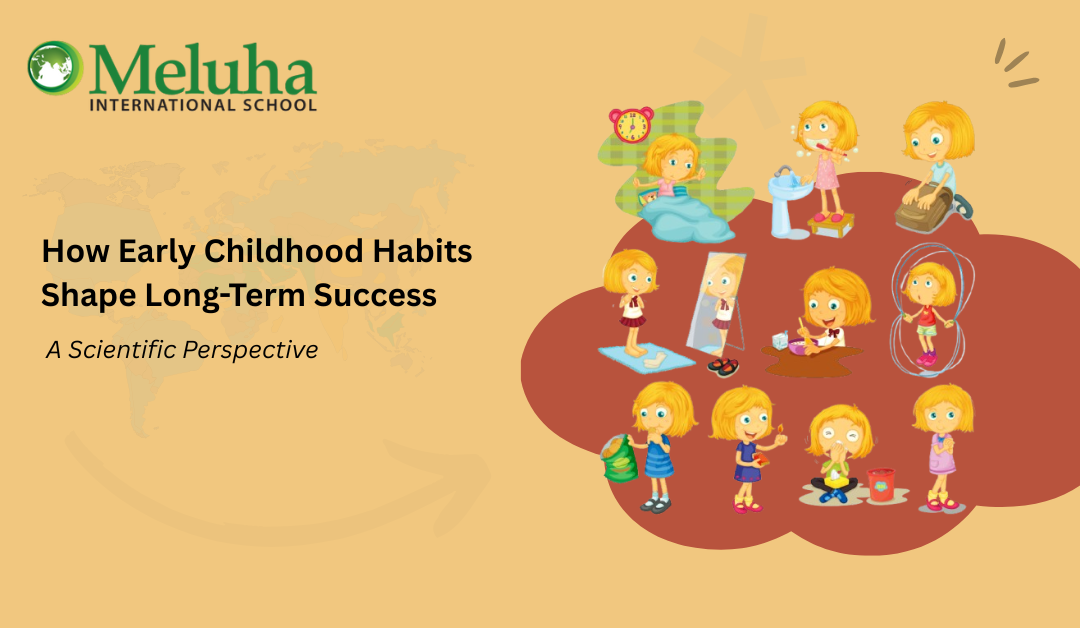
Early childhood is often called the “foundation stage of life”—and for good reason. The early childhood habits children form in their first years are not temporary behaviors; they are neurological blueprints that guide learning, emotional balance, discipline, decision-making, and even career success.
Modern neuroscience consistently shows that what a child repeatedly does in early years becomes their long-term pattern of thinking, learning, and behaving. This makes these formative years a golden window for parents to cultivate child development habits that ensure long-term success in children.
This blog explores the science behind early childhood development, the role of child development habits, and how early routines shape life-long success.
1. The Scientific Foundation: Why Early Childhood Habits Matter
Early childhood development is the strongest predictor of future learning and achievement. By age five, a child’s brain forms over 1 million neural connections per second, which are strengthened by repeated behaviors and routines—what we call early childhood habits.
Activities that reinforce these habits include:
- Talking and conversation
- Daily reading
- Interactive play
- Observing and imitating adults
- Following structured routines
- Emotional bonding
These early habits contribute to cognitive, emotional, and social skills such as:
- Memory and focus
- Creativity and problem-solving
- Emotional regulation
- Language development
This is why focusing on early childhood habits is critical to ensuring long-term success in children.
2. How Child Development Habits Form
Children learn through repetition combined with emotional connection. Child development habits are built when behaviors are repeated consistently:
- Neural circuits strengthen
- The behavior becomes automatic
- The brain expects the routine
Whether positive (reading, helping, sharing) or negative (irregular sleep, excessive screen time), these habits shape the child’s future.
Scientifically supported early childhood habits that promote success include:
- Consistent sleep schedule → memory & emotional stability
- Daily reading → vocabulary, creativity, and learning skills
- Independent play → problem-solving & decision-making
- Helping with small tasks → responsibility & confidence
- Outdoor play → cognitive flexibility
- Open communication → social skills
The earlier these habits are formed, the stronger their impact on long-term success in children.
3. Emotional Habits: Foundations for Success
Emotional habits are critical child development habits that influence lifelong outcomes. These include:
- Identifying and expressing emotions
- Communicating needs effectively
- Managing frustration and big emotions
- Practicing empathy
- Learning conflict resolution
- Understanding personal boundaries
Children with strong early emotional habits develop higher emotional intelligence (EQ), which research shows predicts academic, social, and professional success.
4. Social Habits: Building Confident Children
Social skills developed through early childhood habits are equally important. Key habits include:
- Sharing and taking turns
- Listening actively
- Expressing opinions respectfully
- Following basic social rules
- Making eye contact
- Respecting others’ space
Studies indicate that children with strong early social habits are significantly more likely to achieve long-term success in children, both academically and professionally.
5. Cognitive Habits: Enhancing Learning and Problem-Solving
Cognitive child development habits help children think critically and creatively. Important habits include:
- Storytelling and reading
- Puzzle-solving and building activities
- Artistic expression (drawing, music, crafts)
- Asking questions and exploring
- Following structured routines
These habits improve concentration, memory, logical thinking, creativity, and decision-making—directly contributing to long-term success in children.
6. Daily Routines: Stability Creates Confidence
Predictable routines strengthen early childhood habits. Children with stable routines show:
- Better emotional control
- Improved classroom performance
- Greater self-confidence
- Healthy sleep patterns
- Lower anxiety level
Simple daily routines like morning tasks, quiet time, bedtime stories, and mealtime rituals support child development habits that contribute to lifelong success.
7. Long-Term Impact: Early Childhood Habits Predict Future Success
Long-term research (Harvard, MIT, CDC) confirms that child development habits formed before age seven influence:
- Academic performance
- Career stability
- Financial decision-making
- Communication skills
- Emotional wellbeing
- Leadership ability
- Self-discipline
- Social behavior
Children with healthy early habits are more likely to become confident learners, effective communicators, emotionally resilient adults, independent thinkers, and responsible professionals.
8. How Parents Can Build Positive Early Childhood Habits
Parents can intentionally foster child development habits through:
Cognitive Habits
- Read 10–15 minutes daily
- Introduce open-ended toys
- Encourage puzzles & building blocks
Emotional Habits
- Teach children to label emotions
- Practice gratitude and mindfulness
- Model calm reactions
Social Habits
- Include children in group play
- Allow interaction with different age groups
- Encourage polite conversation
Behavioral Habits
- Maintain predictable routines
- Assign simple responsibilities
- Reward effort over outcome
Physical Habits
- Encourage outdoor play (1 hour/day)
- Limit screen time
- Provide healthy nutrition
These actions help children internalize early childhood habits that support long-term success in children.
Conclusion
The science behind child development habits shows that early childhood is a critical window for shaping the future. By fostering consistent routines, emotional intelligence, social skills, and cognitive growth, parents can ensure children develop the foundation for long-term success in children.
Early childhood habits don’t just shape childhood—they shape a lifetime of learning, achievement, and well-being.
